The Quiet Work of the Marsh at Dawn
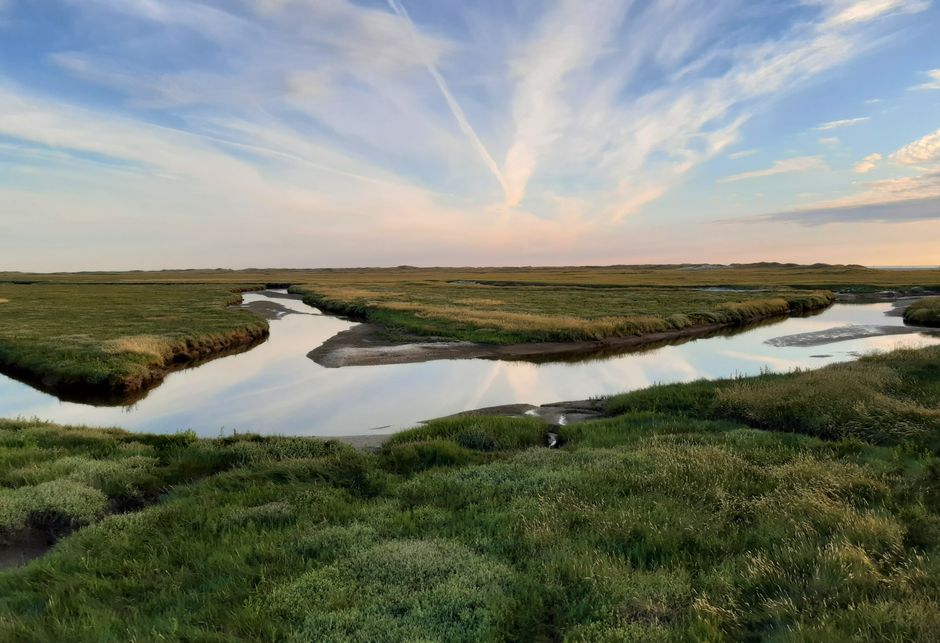
There is a version of the salt marsh that most people never see. It happens in the hour before the sun clears the tree line, when the water lies flat and pewter-colored and the only sound is the soft ticking of spartina stems shifting in a breeze too gentle to name. The marsh at dawn is not dramatic. It is patient. And patience, it turns out, is the whole point.
I have walked the same boardwalk for years now, and I still learn something new each time I arrive early. On this particular morning, the tide was low, exposing the wrinkled mudflat where fiddler crabs had already begun their sideways commerce. A single willet picked along the edge of the channel, probing the sediment with a precision that made my own footsteps feel clumsy. The air smelled of sulfur and salt and something vaguely green, like the inside of a cut stem.
What the Mud Remembers
People often think of wetlands as transitional places, neither water nor land, and therefore somehow incomplete. But spend enough mornings in a marsh and you begin to understand that the transition is the habitat. The twice-daily flood and retreat of the tide is not an inconvenience to the creatures here; it is the rhythm they evolved around. Snails climb the stems to wait out high water. Killifish slip into the flooded grass to feed and hide. The mud itself holds the memory of every tide, layering organic matter in slow, dark increments.
That mud is also a carbon vault. Coastal wetlands like this one store carbon in their soils at rates that make them quietly remarkable among ecosystems, though I am wary of reducing a place to a number. The marsh does not exist to serve us. It exists, and in existing it does things that happen to benefit us. There is a difference, and it matters.
A Shift in the Light
By the time the sun finally lifted above the far shore, the whole scene had changed character. The pewter water turned to bronze, then to a pale gold that caught the dew on the spartina and turned every blade into a filament of light. A great blue heron arrived without announcement, folding its wings with the unhurried dignity of a creature that has never once been in a rush. It stood in the shallows and waited, and I waited with it.
This is the part of marsh conservation that rarely makes headlines. Not the dramatic rescue, not the courtroom victory, but the daily, unglamorous act of paying attention. A marsh that no one visits is a marsh that no one will defend when the permits are filed and the dredge is scheduled. The quiet work of dawn is not just the marsh's work. It is ours too.
When I finally turned back toward the parking lot, the tide had begun its slow return, creeping up the channels like a hand reaching for something it had set down. By afternoon, the mudflats would be gone. By evening, the heron would have moved on. But the marsh would still be here, doing what it has done for thousands of years, one tide at a time.